We produced two professional development sessions at the 2026 annual conference of the Society for the Advancement of Chicanos and Native Americans in Science (#SACNAS2026) in Long Beach, CA.
Engaging the Public with Informal Science Learning Using Low-riders, Robots, and Flamingos
The public needs to understand STEM to make informed decisions that affect their daily personal lives and our nation's well-being. Undergraduates, PhD trainees, and faculty/professionals can engage the public in understanding these topics through science communication (SciComm) activities. Attendees at our session will learn about the unique SciComm area of "informal science learning" (ISL) where the public engages with STEM outside of the formal education classroom. SACNAS members and chapters may have volunteered in STEM outreach activities through their campus institutions. But did you know that informal science learning practice can be a full-time career at a science museum, zoo, or after-school program? Our panel experts will discuss the field of informal science learning, different examples of STEM outreach activities, and how to prepare for jobs in this field. We will describe several ISL projects. Activities from the Mobile Maker program at Cal State Long Beach range from building marble rollercoasters, to designing battery-operated bug mimics, to developing code to guide mini robots through simulated earthquake rubble. University of California, Irvine comparative physiology PhD students have developed novel demonstrations of flamingo standing and feeding behaviors. Kids use lab 3D printed anatomical models to mimic bird beak and leg movements for an immersive experience. Finally, Lowrider Labs of the Columbia Memorial Space Center teaches students how to design and build custom lowrider bicycles, models, and remote-control vehicles that demonstrate real-world S.T.E.A.M. skills (including Art). This project, in particular, involves culturally relevant activities to foster a positive environment for Los Angeles youth.
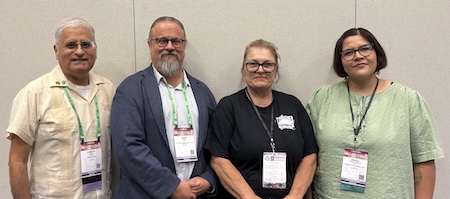
Informal Science Learning Speakers
Pictured from left to right
Alberto Roca, Ph.D., Moderator/Chair
Executive Director, DiverseScholar
James Kisiel, Ph.D.
Professor of Science Education; California State University, Long Beach
Christina Romero, M.S.,
Program Manager, Lowrider Lab, Columbia Memorial Space Center
Jessica Flores-Osorio
PhD Graduate Student, Ecology & Evolutionary Biology; University of California, Irvine
Postdoc Fundamentals: Selecting a Training Experience to Match Your Career Goals
Advanced PhD graduate students will learn how postdoctoral training can enhance their competitiveness for academia, industry, and other careers. Presenters will describe 1) different postdoc types, 2) advisor & project selection considerations, 3) sources of funding, 4) resources for professional development such as the MinorityPostdoc.org career portal, 5) local and national peer support groups such as diversity postdoc associations, & 6) how to best use your institution's postdoc office.
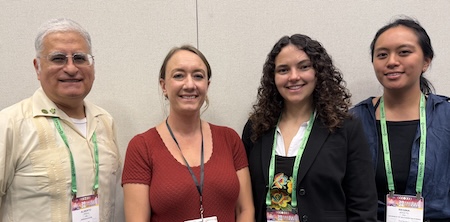
Postdoc Fundamentals Speakers
Pictured from left to right
Alberto Roca, Ph.D., Moderator/Chair
Executive Director, DiverseScholar
Kayleigh Anderson-Natale, Ph.D.
Director of Postdoc and Professional Development; University of California, Irvine
Kate Kragness, Ph.D.
Postdoctoral Researcher, Anatomy and Cell Biology (w/background in Pharmaceutical Sciences); University of Iowa
Regina Agulto, Ph.D.
Postdoctoral Research Associate, Department of Physics and Astronomy (w/background in Molecular, Cellular and Integrative Physiology); University of Southern California
Postdoc Resources
Postdoc-focused Diversity Affinity Groups
A.I. Roca (2020) Diversity Funding for Your Postdoctoral Research: Advice for a Successful Experience, DiverseScholar 11:2
C. Blagden & I. Vidal Pizarro (2023) Could You, Would You, SHOULD You Do a Postdoc? DiverseScholar 14:2
H.R. Waite & A.I. Roca (2022) Learning about Postdoc Fundamentals at SACNAS. DiverseScholar 13:2